The Journey from referral to confident smile
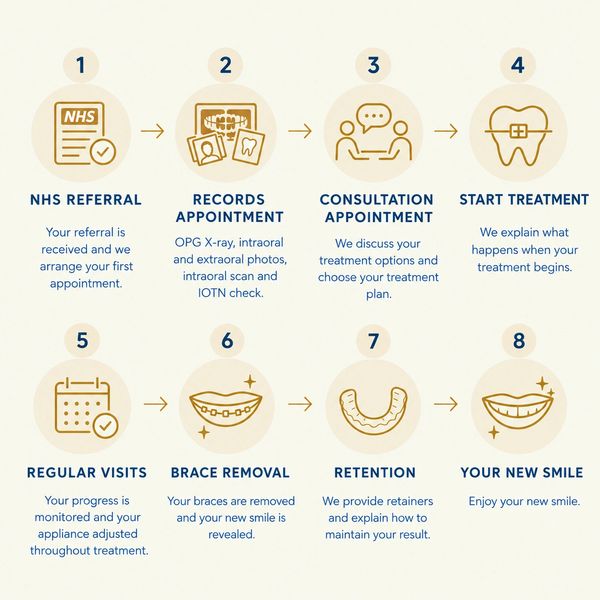
The NHS Journey
Are you aged 17 or under? You may be eligible for NHS orthodontic treatment. Speak to your Dentist about a referral to our practice, and take the first step towards your new smile!

your first appointment: A friendly, thorough and relaxed experience

Your first appointment will involve gathering detailed records to assess your teeth and bite and help us determine the most appropriate next steps for your orthodontic treatment.
NHS Referral: If you have been referred through the NHS, this appointment will include an assessment of your IOTN score, which helps determine your eligibility for NHS orthodontic treatment and whether you are ready to proceed.
Private Referrals: If you have been referred privately, you will have the opportunity to discuss your concerns with a Specialist Orthodontist. We will examine your teeth and bite, answer your questions and talk you through the most suitable treatment options for your individual needs.
Important Information:
- Children and young people can attend with a parent or guardian.
- Please remove all facial jewellery and necklaces before attending your appointment.
Treatment Time

Treatment time varies depending on the complexity of each case and may extend beyond 24 months.
The length of treatment also depends on how well you care for your brace and attend your regular appointments. Following the clinician's advice and attending scheduled visits can help keep your treatment on track.
Longer treatment times can increase the risks associated with orthodontic treatment.
We’ll support you throughout your journey to help achieve the best possible outcome

Understanding your options
Understanding your options
Understanding your options
NHS or Private?
We'll explain whether you're eligible for NHS treatment, what happens if you do not qualify and can direct you to our treatment plan coordinator. You'll have the opportunity to ask questions.
If you decide to go ahead
Understanding your options
Understanding your options
Your treatment journey
You'll have your brace fitted, attend regular appointments and may need additional procedures. Additional procedures may be at your dentist or we may need to refer you to an appropriate setting.
will it hurt?
Understanding your options
Sometimes treatement needs to wait
A little tenderness not lasting pain
You may feel some tenderness after brace fitting and adjustment appointments. This usually settles quickly and can be managed with a soft food diet and appropriate over the counter pain relief.
Sometimes treatement needs to wait
Sometimes treatement needs to wait
Sometimes treatement needs to wait
It's not always the right time
Sometimes we can't always tell if you qualify for treatment or you may not be ready to start because:
- All adult teeth haven't erupted yet
- Habits like thumb sucking need to stop
- Oral hygiene needs to improve
We'll review you again and follow up again in another records appointment.
Looking after your smile
Sometimes treatement needs to wait
Looking after your smile
Your general Dentist plays a vital role
You should continue to see your general dentist for regular check ups throughout your orthodontic treatment.